June 16, 2026 · Obsessed Living Research Team
GHK-Cu Copper Peptide: A Research Overview
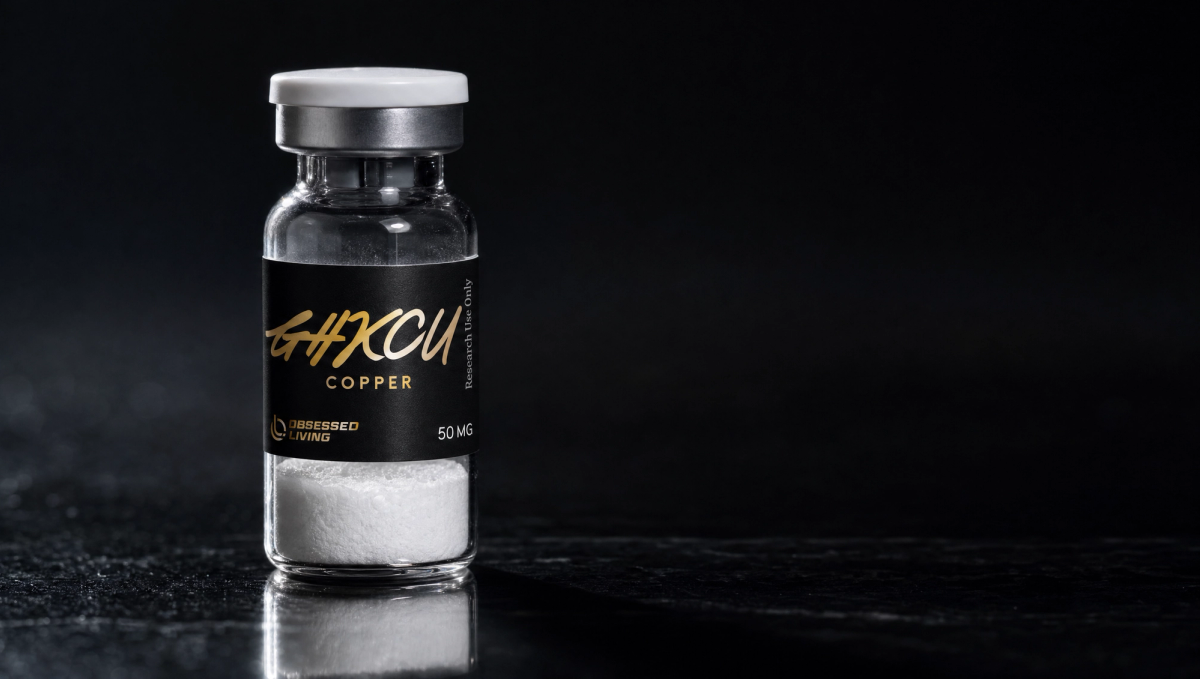
GHK-Cu is a naturally occurring copper-binding tripeptide (glycyl-L-histidyl-L-lysine complexed with copper) studied as a research compound in laboratory and preclinical models.
What Is GHK-Cu?
GHK-Cu (copper tripeptide-1) is a complex of three amino acids — glycine, L-histidine and L-lysine — bound to a copper(II) ion. The tripeptide GHK was first isolated from human plasma, and in the lab the copper complex is typically supplied as a lyophilized powder. The available data comes overwhelmingly from in-vitro (cell culture), tissue-homogenate and animal research, or from topical cosmetic-formulation contexts. It has not completed large human clinical trials.
What the Research Describes
Mechanistic studies — in cells and animals — have investigated several overlapping pathways:
- Collagen and extracellular-matrix gene expression in cultured human fibroblasts (mRNA for collagen, elastin, proteoglycans and glycosaminoglycans), studied in vitro.
- Copper binding and transport, where the tripeptide forms a stable complex with copper(II) and has been studied as a modulator of cellular copper handling.
- Antioxidant and iron-handling pathways, examined in tissue-homogenate and in-vitro systems for effects on ferritin iron release and markers of lipid peroxidation.
- Broad gene-expression modulation, observed in cultured human cell lines via genomic/microarray analysis (e.g., the Connectivity Map dataset).
- Tissue-remodeling and angiogenic signaling, studied in animal wound-healing models and fibroblast cultures.
These describe mechanisms observed in laboratory and animal research — not demonstrated effects in humans.
A Note on the Current Evidence
- A large share of the foundational mechanistic and review literature originates from a small number of investigators, which limits independent replication.
- Most data derive from in-vitro, tissue-homogenate, animal or topical-cosmetic contexts — these do not establish systemic effects in humans.
- There is a lack of large, randomized, controlled human clinical trials; cell and animal findings frequently do not translate to people.
Forms and Handling in Research
In a research setting GHK-Cu is handled as a lyophilized (freeze-dried) powder, commonly reconstituted with bacteriostatic water for laboratory use, stored cold and protected from light, and supplied with purity testing (e.g., HPLC) and lot documentation.
Research-Use and Legal Status
GHK-Cu is sold and used as a research compound only. It is not an FDA-approved drug, not a dietary supplement, and not intended for human or animal consumption.
The Obsessed Living Research Team summarizes peer-reviewed peptide research for educational, research-use reference. Content is not medical advice.