June 18, 2026 · Obsessed Living Research Team
Ipamorelin vs. Other GH-Releasing Peptides: What the Research Compares
The GH-releasing peptide (GHRP) family includes several synthetic compounds studied as agonists at the ghrelin/GHSR-1a receptor. Ipamorelin is one of them — and because researchers have often studied multiple GHRPs in parallel, the literature provides comparisons worth understanding in a research context. This article summarizes what published studies have compared, not what any compound does in a clinical setting.
The GHRP family in brief
GHRPs are synthetic peptides studied for their capacity to activate GHSR-1a and stimulate pulsatile GH release from pituitary somatotrophs. The major compounds studied in this class include:
- GHRP-6 — one of the earliest characterized; studied extensively in pituitary cell assays
- GHRP-2 — higher potency than GHRP-6 in some cell assays; also studied for appetite signaling effects
- Hexarelin — structurally related; studied in cardiac and metabolic models as well as GH release
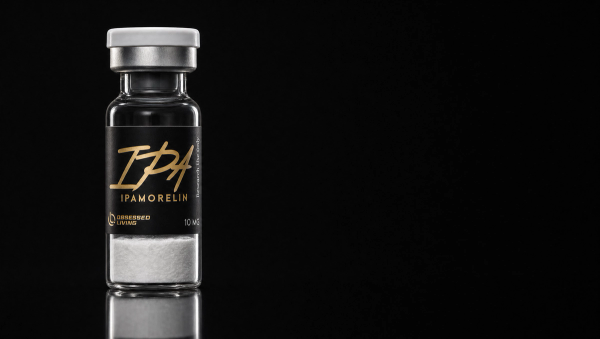
- Ipamorelin — later-generation pentapeptide; characterized as more selective in the research literature
These compounds share a common receptor mechanism — all studied as GHSR-1a agonists — but differ in their selectivity profiles, metabolite characteristics, and the breadth of biological effects observed in pre-clinical models.
Selectivity: what the literature compared
The most frequently cited distinction between Ipamorelin and earlier GHRPs in the research record concerns selectivity — specifically, whether compounds stimulate release of hormones other than GH when administered in animal models.
GHRP-6 and GHRP-2 have both been observed to stimulate ACTH and cortisol release alongside GH in animal assays, as well as prolactin in some models [1]. Hexarelin, a structurally similar compound, showed broader hormonal stimulation in pre-clinical studies.
Ipamorelin was characterized in the original peer-reviewed literature as the "first selective growth hormone secretagogue" precisely because studies observed GH release without the co-stimulation of ACTH/cortisol or prolactin seen with other peptides at equivalent doses in the same animal models [2]. Researchers described this as a more "clean" pharmacological profile from an endocrine-selectivity standpoint.
It is critical to note: this selectivity characterization derives entirely from pre-clinical (animal and cell-culture) research. Reviews of the overall GH secretagogue evidence base note that human clinical data — and thus human selectivity comparisons — remain limited [3].
Potency comparisons in cell assays
Research examining GH-releasing potency across the GHRP class has used rat pituitary cell assays as a standard in-vitro model. Studies comparing GHRP-2 and GHRP-6 in rat primary pituitary cells found that GHRP-2 exhibited higher potency than GHRP-6 in those assays [4]. Ipamorelin-derived analogs have also been characterized for in-vitro potency in rat pituitary assays, with the parent ipamorelin series showing high in-vitro efficacy and a basis for further peptidomimetic development [5].
These comparisons are made in controlled assays under defined laboratory conditions; they describe receptor pharmacology, not clinical outcomes.
Metabolite profiles: anti-doping research perspective
A 2015 study investigating the metabolites of GHRPs in human urine following nasal administration — conducted in an anti-doping research context — examined GHRP-1, GHRP-2, GHRP-6, Hexarelin, and Ipamorelin. The study found that GHRP-6 was excreted largely unchanged, detectable in urine up to 23 hours post-administration, whereas Hexarelin and Ipamorelin underwent intensive metabolism, being excreted as a set of parent compounds plus metabolites [6]. This metabolite pattern is a pharmacokinetic characteristic studied for detection purposes, not a therapeutic parameter.
An earlier pharmacokinetic study examining nasal absorption found that Ipamorelin's systemic plasma clearance was approximately five-fold lower than GHRP-6, with primary excretion via urine rather than bile [7]. These are laboratory-measured pharmacokinetic characteristics of the compound.
CJC-1295: a different compound class
CJC-1295 is a GHRH (growth hormone-releasing hormone) analog — it is not a GHRP and acts through a different receptor (the GHRH receptor on pituitary somatotrophs) rather than GHSR-1a. Published research has studied CJC-1295 independently for its effects on GH/IGF-1 axis activity [8]. Because the mechanisms differ, the research literature treats CJC-1295 and GHRPs as distinct compound classes, even though both are studied in the context of GH axis pharmacology. No claims are made here about combining compounds.
How to read this
Comparing GHRPs in a research context means comparing receptor pharmacology, selectivity profiles in animal assays, and pharmacokinetic characteristics in controlled studies. It does not translate to clinical comparisons or treatment guidance. The pre-clinical record distinguishes these compounds in ways that matter for laboratory research design; human data remains too limited for meaningful clinical differentiation.
For the broader picture, see the [Ipamorelin research overview](/research/ipamorelin).
The Obsessed Living Research Team summarizes peer-reviewed peptide research for educational, research-use reference. Content is not medical advice.