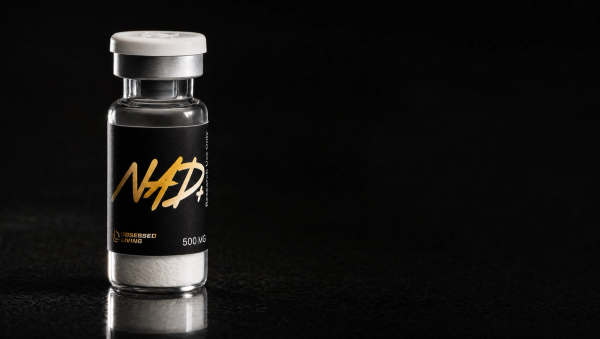
June 18, 2026 · Obsessed Living Research Team
NAD+, Sirtuins & Mitochondrial Function in Published Research
When researchers describe NAD+ as central to cellular energy metabolism, they are pointing — in part — to its role as the obligate co-substrate for sirtuin enzymes. Here is what the pre-clinical literature has examined at the molecular level, framed as laboratory observations rather than human effects.
NAD+ as a sirtuin co-substrate
Sirtuins (SIRT1–SIRT7) are a conserved family of NAD+-dependent protein deacylases. Their enzymatic activity requires NAD+: for every deacetylation reaction, one molecule of NAD+ is consumed, generating nicotinamide (NAM) and O-acetyl-ADP-ribose as byproducts [1]. This means sirtuin activity is directly sensitive to the local availability of NAD+ — when cellular NAD+ pools fall, sirtuin catalytic rate declines proportionally.
Published research has used this mechanistic coupling to frame NAD+ as a nodal regulator: experiments that raise or lower NAD+ in cultured cells or animal models consistently produce downstream changes in sirtuin-dependent acetylation patterns across target proteins [2].
SIRT1 and SIRT3: the most studied members
SIRT1 is primarily nuclear/cytoplasmic and is the most extensively studied sirtuin in the context of NAD+. Its best-characterized substrate in the mitochondrial-function context is PGC-1α (peroxisome proliferator-activated receptor gamma coactivator 1-alpha), a transcriptional co-activator that influences mitochondrial biogenesis and oxidative metabolism. Research has shown that SIRT1-mediated deacetylation of PGC-1α modulates its activity in cell and animal models [3]. Studies in a mouse model of mitochondrial disease found that NAD+-dependent SIRT1 activation was associated with correction of the mitochondrial phenotype [4].
SIRT3 is the predominant mitochondrial sirtuin — it localizes to the mitochondrial matrix and controls global mitochondrial protein acetylation. Research has established SIRT3 as a target of PGC-1α and investigated its role in suppressing reactive oxygen species (ROS) and influencing mitochondrial biogenesis in cell culture [5]. A related study found that NMN (nicotinamide mononucleotide, a NAD+ precursor) administration in mice increased hippocampal mitochondrial NAD+ pools and drove SIRT3-mediated decreases in global mitochondrial protein acetylation and ROS levels [6].
The UPRmt and FOXO connection
A landmark study in *C. elegans* and mammalian cells, published in *Cell* in 2013, examined what happens when NAD+ levels are manipulated at the organismal level [2]. The researchers found that:
- Decreasing NAD+ levels in worms reduced lifespan, while genetic or pharmacological restoration of NAD+ produced the opposite observation.
- The effects were dependent on the sirtuin sir-2.1 (SIRT1 ortholog) and involved activation of the mitochondrial unfolded protein response (UPRmt) — a stress-signaling pathway that communicates mitochondrial status to the nucleus.
- FOXO transcription factor DAF-16 nuclear translocation was also implicated in the observed longevity-related phenotype.
This study is frequently cited in the NAD+/sirtuin literature as evidence that the NAD+–sirtuin axis intersects with broader stress-response and transcriptional programs in laboratory models. The research was conducted in invertebrates and cell-based assays; the extent to which the findings translate to mammalian physiology remains under active investigation.
Mitochondrial dynamics: fission, fusion, and NAD+
A separate line of research has examined whether NAD+ availability — particularly via NMN — influences the physical dynamics of mitochondrial networks (fission and fusion). One study in male mice reported that NMN altered mitochondrial dynamics through a SIRT3-dependent mechanism, observing changes in the balance of fission and fusion markers in hippocampal tissue [6]. These are findings in animal models and their relevance to human biology is not established.
How to read this
Each of these observations comes from controlled laboratory or animal work. The mechanistic chain — NAD+ → sirtuin activity → downstream transcriptional and metabolic changes — is well-supported in pre-clinical models, which is why it is a major focus of basic-science research. Translating pre-clinical sirtuin biology to human therapeutics has proven difficult; the field does not yet have approved interventions based on this pathway, and clinical trials in humans are generally at the pharmacokinetic and safety stage rather than clinical-outcome stage [7].
For the broader picture, see the [NAD+ research overview](/research/nad-plus).
The Obsessed Living Research Team summarizes peer-reviewed peptide research for educational, research-use reference. Content is not medical advice.