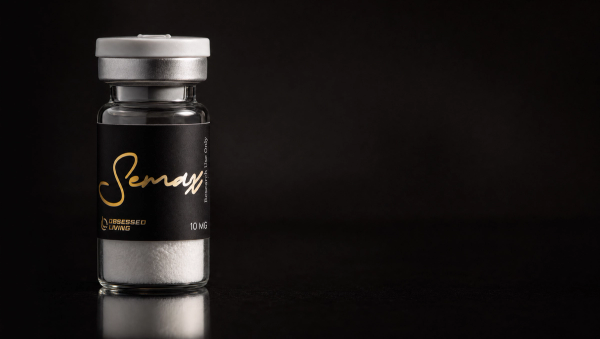
June 16, 2026 · Obsessed Living Research Team
Semax Peptide: A Research Overview
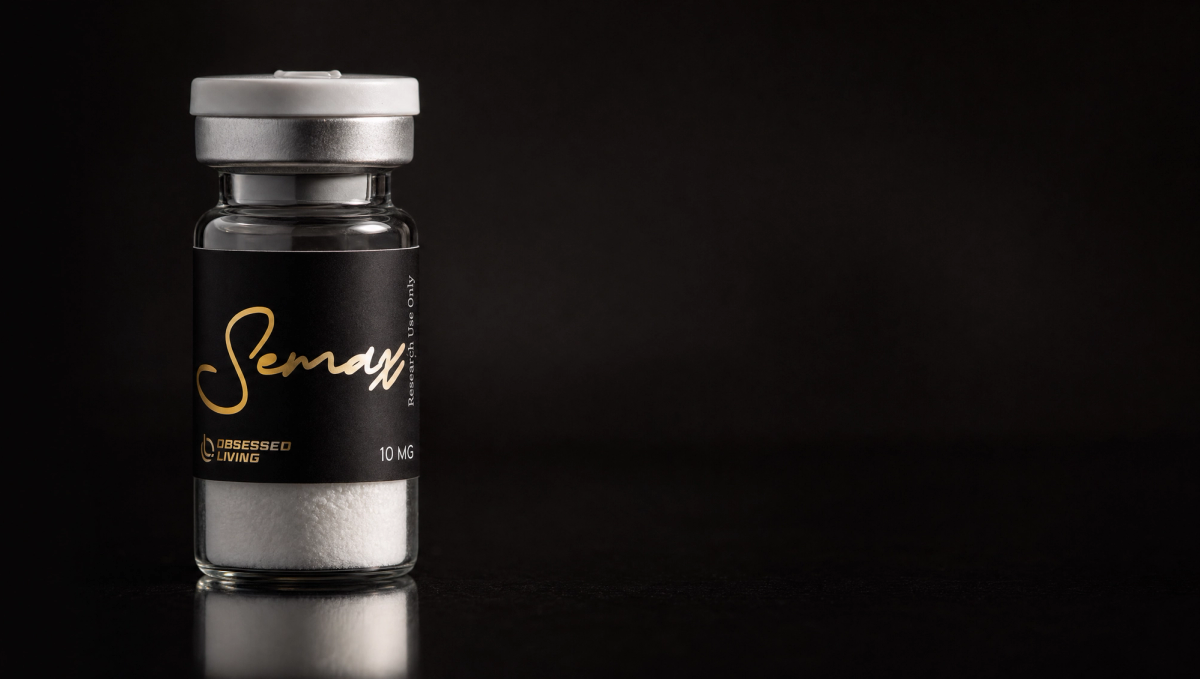
Semax is a synthetic heptapeptide (Met-Glu-His-Phe-Pro-Gly-Pro), a research-use analog of the ACTH(4-10) / ACTH(4-7) fragment, studied in laboratory and animal models.
What Is Semax?
Semax is a seven-amino-acid peptide derived from a fragment of adrenocorticotropic hormone (ACTH(4-7)) with a C-terminal Pro-Gly-Pro motif. It is registered and used as a medication in Russia, but in the United States it is not FDA-approved and is handled as a research compound. In the lab it is typically supplied as a lyophilized powder. Much of the published data is preclinical (cell and rodent models) and a large share originates from Russian research groups.
What the Research Describes
Mechanistic studies — in cells and animals — have investigated several overlapping pathways:
- BDNF and trkB expression in rat hippocampus, where a single dose was reported to raise BDNF protein and exon-III BDNF mRNA plus trkB mRNA and phosphorylation, studied in animal tissue.
- Monoaminergic modulation in rodents, including changes in striatal serotonin-metabolite levels and dopaminergic responses in neurochemical models.
- Neuroprotection in cerebral ischemia–reperfusion models (rat tMCAO), where transcriptome and protein-expression analyses reported modulation of neurotrophin and inflammatory pathways.
- Melanocortin / ACTH-analog activity characterized in preclinical work without a reported corticotropic (adrenal-stimulating) effect.
- Resistance to enzymatic degradation, studied biochemically as a feature of the C-terminal Pro-Gly-Pro motif.
These describe mechanisms observed in laboratory and animal research — not demonstrated effects in humans.
A Note on the Current Evidence
- A large share of the Semax literature is Russian-language and originates from a limited set of groups (notably the Institute of Molecular Genetics, Moscow), which limits independent external replication.
- Semax is registered and used as a medicine in Russia, but it has not been FDA-approved and has not been evaluated in large independent Western clinical trials.
- There is a shortage of large, independent, placebo-controlled human trials, so preclinical mechanistic findings should not be extrapolated to human outcomes.
Forms and Handling in Research
In a research setting Semax is handled as a lyophilized (freeze-dried) powder, commonly reconstituted with bacteriostatic water for laboratory use, stored cold and protected from light, and supplied with purity testing (e.g., HPLC) and lot documentation.
Research-Use and Legal Status
Semax is sold and used as a research compound only. It is not an FDA-approved drug, not a dietary supplement, and not intended for human or animal consumption.
The Obsessed Living Research Team summarizes peer-reviewed peptide research for educational, research-use reference. Content is not medical advice.