June 18, 2026 · Obsessed Living Research Team
Semax vs. Selank: What the Published Research Compares
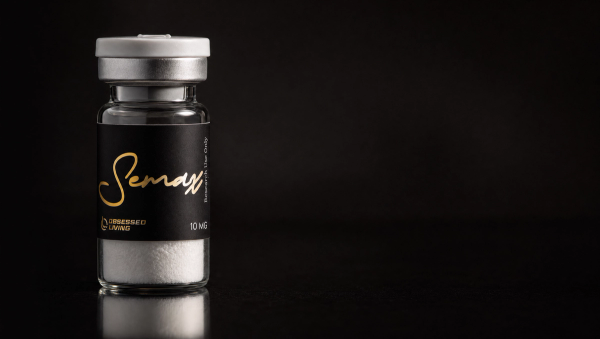
Semax and Selank are frequently named together in discussions of research-stage neuropeptides, and for good reason: both are synthetic heptapeptides, both emerged from Russian neuroscience research programs, both carry C-terminal Pro-Gly-Pro stabilizing extensions, and both appear in the same published studies. But the two compounds are structurally distinct, are derived from different endogenous parent peptides, and the literature characterizes their studied receptor interactions very differently. Here is what the pre-clinical research actually compares.
Structural origins: where the two peptides diverge
Semax (Met-Glu-His-Phe-Pro-Gly-Pro) is derived from the N-terminal fragment of adrenocorticotropic hormone — specifically ACTH(4-7) — combined with a Pro-Gly-Pro C-terminal extension [1]. The ACTH(4-7) core overlaps structurally with alpha-melanocyte-stimulating hormone, placing Semax in the melanocortin peptide family and orienting the research literature toward melanocortin receptor interactions and neurotrophin signaling pathways.
Selank (Thr-Lys-Pro-Arg-Pro-Gly-Pro) has a different lineage. It is a synthetic analogue of the endogenous tuftsin peptide (Thr-Lys-Pro-Arg), a tetrapeptide associated with immune function, with the same Pro-Gly-Pro C-terminal stabilizer appended [2, 3]. Because tuftsin has no structural relationship to ACTH or melanocortins, Selank does not share Semax's melanocortin-pathway orientation. Instead, the published literature has examined Selank in the context of the GABAergic system and enkephalin-degrading enzyme inhibition.
The shared Pro-Gly-Pro extension is not coincidental — it is the same stabilizing tripeptide that has been studied independently from both compounds and that appears in the Semax literature as a potentially active fragment on its own [4].
Different studied receptor and signaling targets
This structural divergence produces a research literature that, while overlapping in some areas, is focused on distinct molecular systems for each compound.
Semax — melanocortin and neurotrophin pathways. Published work on Semax has consistently examined neurotrophin gene expression (BDNF, NGF, TrkB) and the melanocortin receptor system (MC1R–MC5R), given Semax's structural derivation from ACTH [5, 6]. Gene-expression studies in rodent ischemia models have characterized Semax's transcriptional effects in terms of neurotrophin upregulation and modulation of immune-associated gene programs [7, 8].
Selank — GABAergic system and enkephalin pathways. A foundational mechanistic finding in the Selank literature involves the GABAergic system. One published study analyzed the expression of 84 genes involved in GABAergic neurotransmission in rat frontal cortex following Selank administration, reporting significant differential expression and characterizing Selank's action as involving allosteric interaction with GABA-A receptors — a mechanism more analogous to classic benzodiazepine pharmacology than to the melanocortin/neurotrophin research associated with Semax [2]. Additionally, both Semax and Selank have been shown in published work to inhibit enkephalin-degrading enzymes from human serum, though this is more central to the Selank mechanistic literature [9].
What both compounds share in the literature
Despite their structural differences, Semax and Selank appear together in several research contexts:
Enkephalin-degrading enzyme inhibition. A study examined both Semax and Selank as inhibitors of enkephalin-degrading enzymes in human serum, finding that both peptides demonstrated this property in the in-vitro assay. This finding is mechanistically interesting but is a starting point for research rather than an established therapeutic mechanism [9].
Parkinsonism-related behavioral models. A rodent study examined both Semax and Selank in a 6-hydroxydopamine (6-OHDA) model designed to produce Parkinson's disease-like dopaminergic lesions, comparing behavioral outcomes between the two peptides in the experimental model [10].
Resting-state functional neuroimaging. The most direct head-to-head comparison is a neuroimaging study that assessed whole-brain resting-state functional connectivity (fMRI) in 52 healthy research participants following administration of either Semax, Selank, or placebo. The study examined regions of interest including the amygdala and dorsolateral prefrontal cortex, and reported between-group and between-condition differences in functional connectivity involving the right amygdala and connected regions [11]. This study examined both compounds under the same conditions — the clearest comparative framework available in the published literature.
How the research characterizes the two compounds
The popular-literature framing of Semax as a "nootropic" and Selank as an "anxiolytic" reflects labels applied by some researchers based on the compounds' studied systems (melanocortin/neurotrophin versus GABA/enkephalin). These are research-register characterizations based on signaling-pathway associations in laboratory models — they are not approved clinical indications or validated human effects. The published literature itself uses these terms as shorthand for experimental paradigms, not as benefit claims.
A review-level description of the distinction would be: Semax research has been oriented toward neurotrophin expression changes and melanocortin-pathway interactions in pre-clinical models; Selank research has been oriented toward GABAergic system interactions and enkephalin metabolism in pre-clinical models. Both bodies of work are predominantly pre-clinical. Neither compound is an approved pharmaceutical product in most jurisdictions.
Reading the two literatures together
For researchers interested in comparing these compounds, the most informative approach is to examine their cited signaling pathways separately — Semax through its BDNF/melanocortin research (see the [dedicated spoke on that topic](/blog/semax-bdnf-melanocortin)) and Selank through its GABA/enkephalin literature — and then look to the shared studies for direct comparison data. The resting-state fMRI study [11] and the enkephalin inhibition work [9] represent the published record of direct comparative investigation.
For the broader Semax picture, see the [Semax research pillar](/research/semax).
The Obsessed Living Research Team summarizes peer-reviewed peptide research for educational, research-use reference. Content is not medical advice.