Research Library · Obsessed Living Research Team
BPC-157: Research Overview, Mechanism & Published Studies
What BPC-157 is
BPC-157 is a synthetic peptide composed of 15 amino acids (a "pentadecapeptide"). Its sequence corresponds to a partial fragment of a larger protein — Body Protection Compound — that was originally identified in and isolated from gastric juice [1, 2]. Because it is a stable fragment studied extensively in laboratory models, it is one of the most frequently referenced compounds in the pre-clinical peptide literature.
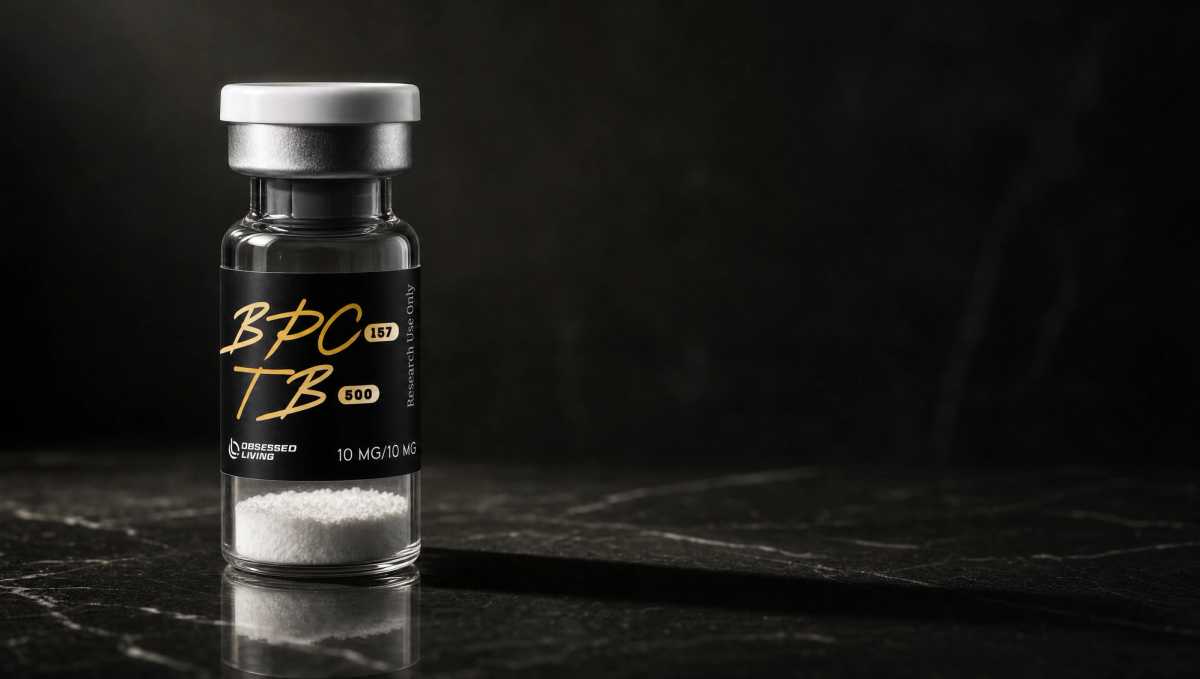
In a research setting, BPC-157 is typically supplied as a lyophilized (freeze-dried) powder for reconstitution and in-vitro investigation. It is supplied for laboratory research use only and is not for human consumption.
Pathways published research has investigated
Published studies — predominantly in animal and in-vitro (cell-based) models — have investigated BPC-157 in the context of several biological pathways. Importantly, these are descriptions of what researchers have *studied*, not statements of effect in humans:
- Angiogenesis signaling. Research has examined BPC-157's relationship to angiogenesis (the formation of new blood vessels), with studies correlating observations to VEGF expression in muscle and tendon healing models [1].
- Tendon-fibroblast activity. In-vitro work has investigated BPC-157's association with tendon explant outgrowth, cell survival under stress, and fibroblast migration in dose-dependent laboratory assays [2].
- Growth-hormone-receptor expression. One study reported that growth hormone receptor was among the up-regulated genes in tendon fibroblasts exposed to BPC-157 in culture, at both mRNA and protein levels [3].
- Nitric-oxide / VEGFR2 pathways. Narrative reviews of the pre-clinical literature describe BPC-157 as interacting with overlapping pathways including VEGFR2 and the nitric-oxide system in laboratory models [4].
The state of the literature
It is important to characterize this body of work accurately. The majority of BPC-157 research has been conducted in animal and cell-culture models, and recent narrative reviews emphasize that human clinical data remains very limited [4, 5]. The compound is not an approved drug, and the research framing reflects that: studies describe mechanisms observed in controlled laboratory settings, not validated outcomes in people.
This is exactly why credible discussion of BPC-157 stays in the research register — "studies have investigated," "in-vitro models observed," "the pre-clinical literature reports" — rather than making claims about what the compound does for a person.
How researchers handle it
In laboratory use, BPC-157 is reconstituted from lyophilized powder, commonly with bacteriostatic water, and handled under standard research conditions. Material supplied for research should carry a Certificate of Analysis confirming HPLC-verified purity so that what is being studied is well-characterized.
Go deeper
- BPC-157: mechanism of action in published studies — a closer look at the specific pathways above.
- BPC-157 vs TB-500: what the research compares — how the two tissue-repair-studied peptides differ in the literature.
- BPC-157 research FAQ — common questions, answered in a research context.
Research materials
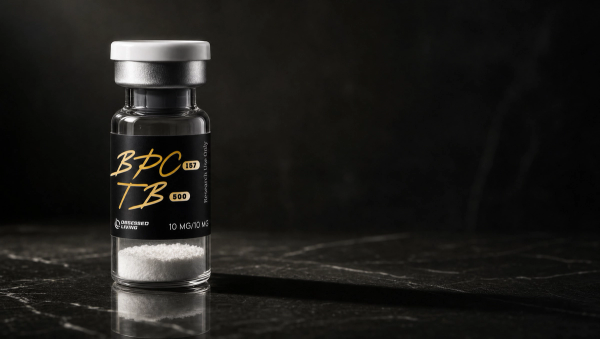
Related compound: BPC-157 / TB-500 — supplied as research-grade lyophilized powder with Certificate of Analysis. Research use only. Not for human consumption.
The Obsessed Living Research Team summarizes peer-reviewed peptide research for educational, research-use reference. Content is not medical advice. Our research standards.