September 29, 2026 · Obsessed Living Research Team
Thymosin Alpha-1 Research FAQ
These answers are written for a research audience and deliberately avoid any health, dosing, or outcome claims. Thymosin Alpha-1 is supplied for laboratory research use only and is not for human consumption.
What is Thymosin Alpha-1?
Thymosin Alpha-1 (Tα1) is a 28-amino-acid peptide first isolated from calf thymus extract and characterized in 1977 as part of "thymosin fraction 5" — a group of thymic peptides studied for their role in T-lymphocyte development [1]. Published research has since focused on its activity as an immune-system modulator.
What does published research study Thymosin Alpha-1 for?
The literature has investigated Tα1's engagement of toll-like receptors on dendritic cells, its effects on dendritic cell maturation, and its influence on T-cell differentiation and cytokine production (including interferon-γ and interleukin-2) [2, 5]. On the clinical-trial side, published research has studied Tα1 in viral hepatitis B and C, severe sepsis, as an adjunct in oncology (including with chemotherapy, interferon, and checkpoint inhibitors), and in a registered COVID-19 trial [3, 5, 6, 8]. These are studied mechanisms and trial endpoints, not established outcomes for an individual.
Is there strong human clinical evidence for Thymosin Alpha-1?
It's mixed, and that's worth stating plainly rather than glossing over. The hepatitis literature is comparatively favorable [3, 4]. The sepsis literature is genuinely inconsistent: a 2025 meta-analysis of 11 randomized trials (1,927 patients) found an overall mortality benefit, but that benefit disappeared when the analysis was limited to only the highest-quality or only the multicenter trials, and a large 2025 trial of 1,106 patients found no significant overall mortality reduction [7]. COVID-19 trial results have likewise been contested [5]. Thymosin Alpha-1 is not an FDA-approved drug.
Is Thymosin Alpha-1 FDA approved?
No. The FDA has explicitly stated it has approved no drug products containing Thymosin Alpha-1. A 2024 FDA review also declined to add Tα1 to the 503A list of substances permitted for pharmacy compounding, concluding the substance was not sufficiently well-characterized and that the nomination did not meet the bar for inclusion [9]. Thymalfasin (Zadaxin), the synthetic form of Tα1, does carry regulatory approval for hepatitis B/C in a number of countries outside the U.S. — but that is a different regulatory question from FDA approval, and it does not change the research-only framing that applies here.
How does Thymosin Alpha-1 compare to Thymosin Beta-4 / TB-500?
They share a thymic origin and a similar name, but the published research studies them in almost entirely different contexts — Tα1 around immune signaling, Tβ4/TB-500 around actin-cytoskeleton biology and tissue-repair processes. See the Thymosin Alpha-1 vs Thymosin Beta-4 (TB-500) comparison.
How is research-grade Thymosin Alpha-1 supplied?
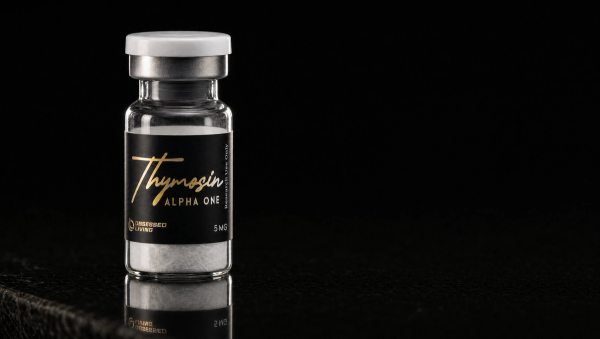
Typically as a lyophilized (freeze-dried) powder for reconstitution in a laboratory setting, accompanied by a Certificate of Analysis confirming HPLC-verified purity.
Can I use Thymosin Alpha-1?
Materials described here are for laboratory research only and are not for human consumption. Nothing here is medical advice.
For the full picture, see the Thymosin Alpha-1 research overview.
The Obsessed Living Research Team summarizes peer-reviewed peptide research for educational, research-use reference. Content is not medical advice.