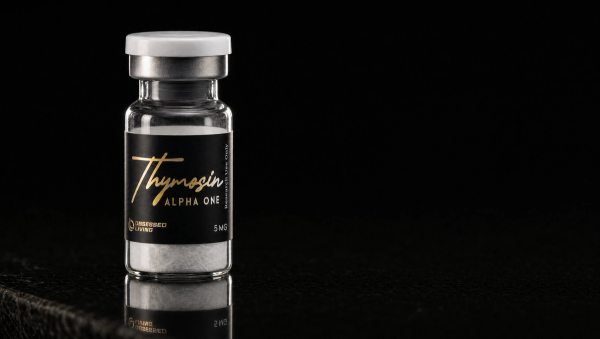
September 29, 2026 · Obsessed Living Research Team
Thymosin Alpha-1 vs Thymosin Beta-4 (TB-500): What the Research Compares
"Thymosin Alpha-1" and "Thymosin Beta-4" sound like variations on the same compound, and that's a common point of confusion in research-peptide discussions. They are not the same molecule, they were not discovered for the same reason, and the published literature studies them in almost entirely different biological contexts. Here's what the research actually compares — framed, in both cases, as laboratory and animal-model findings rather than claims about human use.
Two different peptides from the same thymic extract
Both peptides trace back to "thymosin fraction 5," a crude thymic extract researchers began characterizing in the 1960s and 70s. Thymosin Alpha-1 (Tα1) was the first fraction-5 peptide fully isolated and sequenced — a 28-amino-acid molecule researchers linked from the outset to T-lymphocyte regulation and immune signaling [1]. Thymosin Beta-4 (Tβ4) is a separate 43-amino-acid peptide from the same original extract, but the published literature characterizes it around a completely different biochemical role: it is described as the major actin-sequestering molecule in eukaryotic cells, regulating the cytoskeletal dynamics involved in cell migration [4]. TB-500 is the synthetic research peptide corresponding to this Tβ4 sequence, and is the compound this site's TB-500 research materials refer to.
Immune signaling vs. cytoskeletal / tissue-repair biology
This is the core distinction, and it's not subtle. Published research on Tα1 centers on toll-like receptor engagement, dendritic cell maturation, and T-cell and cytokine signaling — the immune-modulation pathways detailed in the Thymosin Alpha-1 mechanism spoke [2, 5]. Published research on Tβ4/TB-500, by contrast, centers on actin binding and its downstream effects on cell migration, angiogenesis, and tissue-remodeling processes studied in models of dermal and corneal wounds, cardiac and hypoxic injury, and other tissue-repair contexts [4]. A separate body of research on Tβ4 and angiogenesis describes its studied role in both physiological wound repair and pathological contexts such as tumor vascularization, with particular research interest in ischemic heart injury [6].
In short: the published literature studies Tα1 as an immune-system peptide and Tβ4/TB-500 as a cytoskeletal/tissue-repair peptide. Any apparent overlap is a function of the shared name and shared thymic origin, not a shared mechanism.
Where the human clinical trial records diverge
Tα1's human trial record is the more clinically developed of the two, with published trials in viral hepatitis, sepsis, and oncology, plus regulatory approval for hepatitis B/C in a number of countries outside the U.S. (though not FDA approval — see the research overview for the specifics) [3]. Tβ4/TB-500's published research base leans more heavily on preclinical and animal-model tissue-repair studies — actin-sequestration biochemistry, wound-healing and angiogenesis models, and cardiac-injury research — rather than the kind of large multi-country human trial record Tα1 has accumulated [4, 6].
Why researchers sometimes study both
Because the two peptides act on different biological systems (immune modulation versus tissue-repair signaling), some research questions look at both in combination rather than as substitutes for one another — for example, work exploring immune and repair processes together in complex injury or inflammatory models. That is a research design choice grounded in their distinct, published mechanisms, not evidence that the two peptides are interchangeable.
For the broader picture on Tα1 specifically, see the Thymosin Alpha-1 research overview.
The Obsessed Living Research Team summarizes peer-reviewed peptide research for educational, research-use reference. Content is not medical advice.