Research Library · Obsessed Living Research Team
KPV: Research Overview, Mechanism & Published Studies
What KPV is
KPV is a synthetic tripeptide (Lysine-Proline-Valine) corresponding to the C-terminal three amino acids (positions 11–13) of alpha-melanocyte-stimulating hormone (α-MSH), a naturally occurring 13-amino-acid peptide (sequence Ac-SYSMEHFRWGKPV-NH2) [4]. Because it represents only the smallest fragment of the parent molecule, published research has focused on whether KPV retains α-MSH's studied anti-inflammatory activity while acting through a distinct — and apparently receptor-independent — mechanism from the full-length peptide [3].
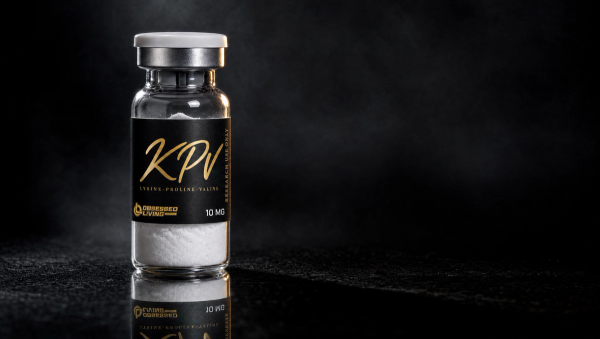
In a research setting, KPV is typically supplied as a lyophilized (freeze-dried) powder for reconstitution and in-vitro or in-vivo investigation. It is supplied for laboratory research use only and is not for human consumption.
Pathways published research has investigated
Published studies — spanning cell-based work and multiple murine (mouse) models — have investigated KPV in the context of several biological pathways. These are descriptions of what researchers have studied, not statements of effect in humans:
NF-κB and MAP kinase signaling via PepT1 transport. Research on intestinal epithelial and immune cells reported that nanomolar concentrations of KPV inhibited activation of the NF-κB and MAP kinase inflammatory signaling pathways and reduced pro-inflammatory cytokine secretion. The same study identified PepT1 — a di/tripeptide transporter expressed in the small intestine and upregulated in the colon during inflammatory bowel disease (IBD) — as the route by which KPV is taken up into cells, and reported anti-inflammatory effects in two separate mouse models of colitis [1].
Murine colitis models. A separate line of research administered KPV in two murine models of intestinal inflammation and reported earlier recovery and significantly stronger regain of body weight in DSS (dextran sulfate sodium)-induced colitis, along with reduced inflammatory infiltrates, describing "significant anti-inflammatory effects in 2 murine models of colitis" [2].
Receptor-independent anti-inflammatory mechanism. A crystal-induced peritonitis study directly compared KPV to full-length α-MSH and to melanocortin receptor agonists. KPV reduced immune-cell (polymorphonuclear leukocyte) accumulation as effectively as the core melanocortin peptides, but — unlike α-MSH — did not increase cAMP in macrophages and was not blocked by a melanocortin-3/4 receptor antagonist. The researchers concluded KPV's anti-inflammatory activity is unlikely to be mediated through classical melanocortin receptors, and is more likely tied to inhibition of interleukin-1β (IL-1β) function [3].
Antimicrobial activity. Research on α-MSH and its KPV fragment reported antimicrobial effects against Staphylococcus aureus and Candida albicans across a broad concentration range, including physiological (picomolar) levels, with the effect proposed to involve increased cellular cAMP in the target organisms. The same research found the peptides did not impair — and appeared to enhance — pathogen killing by human neutrophils [4].
The state of the literature
The KPV literature is built almost entirely on cell-based and animal-model research; searches of the published record turn up no completed human clinical trials specifically evaluating KPV, in contrast to compounds like AOD-9604 that have pooled human safety data. What exists are laboratory investigations of mechanism (PepT1 transport, NF-κB/MAPK inhibition, receptor-independence) and efficacy signals in mouse models of colitis and peritonitis, plus in-vitro antimicrobial data.
That gap matters. A mechanism that inhibits inflammatory signaling in cultured cells or reduces disease scores in a mouse colitis model is not the same as a demonstrated effect in a person, and none of the researchers behind these studies frame their findings that way. KPV has not been approved by the FDA or any regulator as a drug for any use, and it is not a nutritional supplement.
This is exactly why credible discussion of KPV stays in the research register — "published studies have investigated," "murine models reported," "the literature describes" — rather than making claims about what the compound does for a person.
How researchers handle it
In laboratory use, KPV is reconstituted from lyophilized powder, commonly with bacteriostatic water or sterile water depending on the protocol, and handled under standard research conditions. Material supplied for research should carry a Certificate of Analysis confirming HPLC-verified purity so that what is being studied is well-characterized.
Go deeper
KPV: mechanism of action in published studies — a closer look at the PepT1 transport, NF-κB/MAPK, and receptor-independent pathways above.
KPV vs alpha-MSH: what the research compares — how the tripeptide fragment's studied mechanism differs from the full parent peptide in the literature.
KPV research FAQ — common questions, answered in a research context.
Research materials
Related compound: KPV — supplied as research-grade lyophilized powder with Certificate of Analysis. Research use only. Not for human consumption.
The Obsessed Living Research Team summarizes peer-reviewed peptide research for educational, research-use reference. Content is not medical advice. Our research standards.