October 29, 2026 · Obsessed Living Research Team
Lipo-C History: How Choline, Methionine and Inositol Became "Lipotropic"
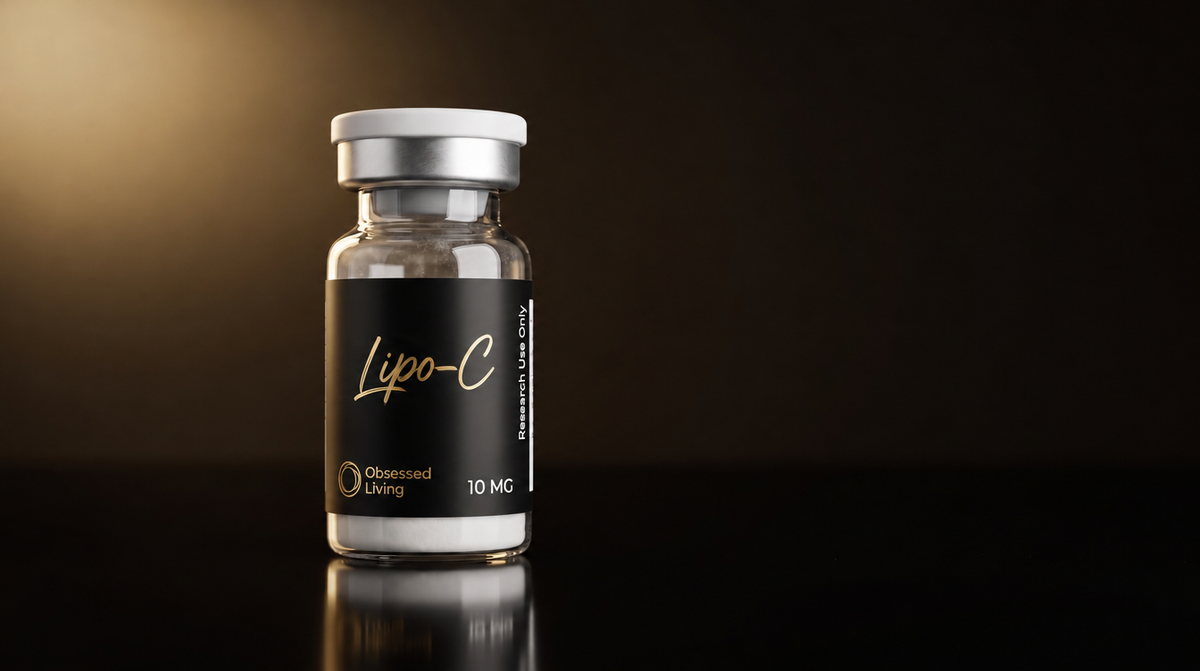
Lipo-C was not discovered the way a single peptide is. It is a blend of methionine, inositol and choline (often with vitamin B12), and each ingredient entered the research literature separately. What ties them together is one research question from the 1930s: why did insulin-treated dogs without a pancreas develop fatty livers? The [Lipo-C research overview](/research/lipo-c) covers what the blend is. This article traces where the "lipotropic" idea came from.
1850–1862: lecithin and choline get their names
The chemistry came first. In 1850 Theodore Gobley isolated a phosphorus-containing substance from brain tissue and carp eggs and named it "lecithine," from the Greek for egg yolk [1]. In 1862 Adolph Strecker found that lecithin from bile, when boiled, produced a new nitrogen-containing compound, which he named choline [1].
For decades, choline was simply a piece of lecithin. Nobody linked it to the liver.
1920s–1932: the fatty-liver puzzle
Insulin made it possible to keep dogs alive after their pancreas was removed. But those dogs developed a new problem: fatty livers. Charles Best, working on pancreatectomized dogs from the 1920s into the 1930s, observed that the fatty liver could be corrected by feeding raw pancreas or lecithin [1].
The next step was to find out which part of lecithin was doing the work. In 1932, Best and colleagues published a run of papers in the *Journal of Physiology*:
- Depancreatized animals. Best and Hershey reported further observations on a component of crude lecithin in depancreatized animals [2].
- Normal rats. Best, Hershey and Huntsman studied lecithin's effect on liver fat deposition in normal rats [3].
- Breaking lecithin down. Best and Huntsman tested lecithin's components separately for their effect on liver fat [4].
Across this work, Best showed that choline was the active component of lecithin that prevented fatty liver in dogs and rats [1].
1935: "lipotropic" becomes a category
In 1935 Best and Huntsman extended the choline work to rats in different nutritional states [5]. The word "lipotropic" (roughly, "acting on fat") came into use for substances that prevented or reversed fat buildup in the liver. By 1944 there was enough work on these substances for a full *Physiological Reviews* article titled "Lipotropic Factors" [12]. Its abstract describes choline's lipotropic action as further proof of the role phospholipids play in moving fat out of the liver [12].
That is the origin of the word now printed on lipotropic injection labels. It began as a description of fat-deficiency chemistry in laboratory animals.
1936–1944: the "lipocaic" detour
Not everyone thought choline was the full answer. Lester Dragstedt's group reported that a pancreas extract prevented fatty liver in insulin-maintained depancreatized dogs. They named it "lipocaic," believing it was a new fat-metabolizing hormone [6].
Other groups tested that idea:
- 1938. MacKay and Barnes split a pancreas extract into protein-rich and choline-rich fractions. In rats on fatty-liver diets, both fractions were about equally effective at limiting liver fat [6]. They concluded that the extract's effect probably came from its choline and protein content together, while noting this was not direct proof [6].
- 1944. A study in the *American Journal of Physiology* tested lipocaic in completely depancreatized, insulin-maintained dogs and concluded that "lipocaic is a poor source of the anti-fatty liver factor of the pancreas" [7].
The lipocaic hormone did not hold up. But the protein finding pointed to the next ingredient.
1940: methionine joins the list
If protein helped, which part of protein? In 1940 Best and Ridout published "The lipotropic action of methionine" in the *Journal of Physiology* [8].
The same year, Vincent du Vigneaud and colleagues reported in the *Journal of Biological Chemistry* that the methyl group of methionine is transferred to choline and creatine in the body [9]. This gave a chemical reason why an amino acid could behave like choline: methionine can supply the methyl groups the body uses to make choline. A later pathway, described by Bremer and Greenberg in 1960, showed how S-adenosylmethionine (made from methionine) is used to build phosphatidylcholine [1]. The [Lipo-C mechanism of action](/blog/lipo-c-mechanism-of-action) spoke covers this pathway in more detail.
1941–1943: inositol, and the first look at a combination
Inositol came next. A 1941 *Journal of Biological Chemistry* paper by Gavin and McHenry described inositol as a lipotropic factor, and it is cited by later inositol studies [11].
Two 1943 reports in *Proceedings of the Society for Experimental Biology and Medicine* followed it up:
- Rats (Forbes). In rats on a high-carbohydrate, low-protein diet, inositol was reported to reduce liver fat, but much less than choline did [10]. Inositol and choline together reduced liver fat more than either alone. The author said the data could not show whether the two acted synergistically [10].
- Surgical patients (Abels and colleagues). In patients with gastrointestinal cancer, the authors reported that untreated livers were usually fatty at surgery. Patients given lipocaic or inositol before the operation had lower average liver fat than the untreated group [11]. Groups were small (8 to 11 patients each), and the authors concluded that inositol alone could plausibly account for lipocaic's effect in these patients [11].
The Forbes rat study is the closest thing in this early literature to a test of combining these ingredients. It used choline and inositol, not the full methionine-inositol-choline blend.
1948: vitamin B12
Many Lipo-C formulations add vitamin B12. Crystalline vitamin B12 was reported by Rickes, Brink, Koniuszy, Wood and Folkers in *Science* in 1948 [13]. B12 was later identified as a cofactor for methionine synthase, the enzyme that regenerates methionine from homocysteine. That places it in the same methyl-group chemistry as the other ingredients.
1991–2001: back to humans
For decades the lipotropic story was mostly about animals. Two lines of human research changed that:
- Choline depletion (1991). Zeisel and colleagues fed healthy male volunteers a choline-free diet for three weeks. Compared with a control group that still received choline, the depleted group showed lower plasma choline and phosphatidylcholine, rising alanine aminotransferase (a liver enzyme), and about a 15% drop in serum cholesterol [14]. The authors concluded that choline is essential for humans when extra methionine and folate are not available in the diet [14].
- A formal intake level (1998). The US Institute of Medicine's Food and Nutrition Board set an Adequate Intake level for choline [1].
- Parenteral nutrition (2001). Buchman and colleagues randomized 15 patients on long-term intravenous nutrition to usual nutrition or usual nutrition plus 2 g choline chloride for 24 weeks [15]. The choline group showed improved CT measures of liver fat and lower liver enzymes. Liver fat came back within 10 weeks of stopping choline [15].
Both studies are about correcting a deficiency. Neither tested choline, or any lipotropic blend, in well-nourished people.
Where the "Lipo-C" injection fits
We did not find peer-reviewed literature that records when, or by whom, methionine-inositol-choline injections were first compounded and sold under "lipotropic," "MIC" or "Lipo-C" names. We also did not find a published clinical trial of the combination as it is sold. The research history above is a history of the individual ingredients, studied mostly in deficiency models.
State of the literature
The history explains why these three ingredients are grouped together, and also why the evidence for the blend is thin.
- "Lipotropic" means deficiency correction. The term came from experiments in animals fed diets designed to cause fatty liver, or animals without a pancreas [1, 5]. It describes preventing a deficiency, not adding something to a normal diet.
- The combination evidence is old and small. The main test of combining ingredients is a 1943 rat study of choline plus inositol [10]. The 1943 human report studied surgical cancer patients over a few preoperative hours, with no randomization described [11].
- Modern human data are about deficiency. The 1991 and 2001 studies show what happens when choline is removed or restored in deficient people [14, 15]. They do not test supplementation in people who are already replete.
- No body-weight evidence. None of the cited research measures fat loss or weight loss from the methionine-inositol-choline blend.
- No approval. Lipo-C is not FDA-approved for any use.
For how the components are studied at the pathway level, see the [Lipo-C mechanism of action](/blog/lipo-c-mechanism-of-action) spoke. For common questions, see the [Lipo-C research FAQ](/blog/lipo-c-research-faq). For how it compares with a related compound, see [Lipo-C vs L-Carnitine](/blog/lipo-c-vs-l-carnitine). For the full picture, see the [Lipo-C research overview](/research/lipo-c).
The Obsessed Living Research Team summarizes peer-reviewed peptide research for educational, research-use reference. Content is not medical advice.