Research Library · Obsessed Living Research Team
Epithalon (Epitalon): Research Overview, Structure & Published Studies
What Epithalon is
Epithalon (also spelled Epitalon; systematic name Ala-Glu-Asp-Gly, abbreviated AEDG) is a synthetic tetrapeptide — a chain of four amino acids: alanine, glutamic acid, aspartic acid, and glycine. Its sequence is derived from epithalamin, a polypeptide fraction extracted from bovine pineal glands. Researchers at the St. Petersburg Institute of Bioregulation and Gerontology identified the AEDG tetrapeptide within the natural pineal polypeptide complex by mass spectrometry and HPLC, and synthesized it for laboratory study [1].
Because Epithalon is a short, synthetic peptide — not a drug approved by any regulatory authority — it is supplied for laboratory research use only and is not for human consumption.
Structure and origin
The tetrapeptide was synthesized to enable controlled laboratory investigation of the biological properties attributed to the broader epithalamin extract. Mass spectrometric analysis of the pineal polypeptide complex confirmed that AEDG-sequence tetrapeptides are present in the natural extract [1]. This structural link between the synthetic compound and the natural source peptide is the basis on which researchers have studied Epithalon as a proxy for pineal gland signaling in vitro and in animal models.
Pathways published research has investigated
Published studies — predominantly in animal models and in-vitro (cell-based) systems — have examined Epithalon in the context of several biological pathways. These are descriptions of what researchers have *studied*, not statements of effect in humans:
- Telomerase activity and telomere biology. A widely cited early study by Khavinson et al. (2003) reported that adding Epithalon to cultures of telomerase-negative human fetal fibroblasts induced expression of the catalytic subunit of telomerase (hTERT), measurable enzymatic telomerase activity, and what the authors described as telomere elongation [2]. A 2025 study in multiple human cell lines (breast cancer lines and fibroblasts) used the TRAP assay and quantitative PCR to report increases in telomere length and telomerase activity, as well as ALT (alternative lengthening of telomeres) pathway activity in telomerase-negative cells [3]. The 2025 paper also noted a correction was published for figure presentation (PMID 41240216), which researchers should consult.
- Pineal melatonin secretion and circadian signaling. Multiple studies from the same Russian institutional group investigated Epithalon's relationship to the pineal gland's melatonin-producing function. Studies in senescent monkeys and elderly humans reported that administration of Epithalon or epithalamin (the parent polypeptide extract) was associated with increased nighttime melatonin levels and normalization of circadian melatonin amplitude in subjects with documented age-associated decline in pineal output [4, 5].
- Clock-gene expression in peripheral leukocytes. A study focused on people with reduced melatonin-producing pineal function found that AEDG peptide was associated with normalization of hyperexpressed *Clock* and *Csnk1e* genes in leukocytes and restoration of hypoexpressed *Cry2*, with accompanying increases in urinary 6-sulfatoxymelatonin — a marker of melatonin metabolism [6].
- Chromatin and epigenetic activity. In vitro work on lymphocytes from donors aged 76–80 reported that Epithalon was associated with activation of ribosomal genes, decondensation of pericentromeric heterochromatin, and release of genes in euchromatic regions that had undergone age-related condensation — observations the authors framed as "chromatin activation" [7].
- Neurogenesis-related gene expression. A cell-culture study reported that AEDG stimulated gene expression and protein synthesis in neurons generated from fibroblasts, with increases in dendritic measures; the authors proposed a possible epigenetic mechanism [8].
The state of the literature — an honest characterization
This is the most important section for any reader trying to evaluate the Epithalon evidence base.
The literature is thin and heavily concentrated. The large majority of Epithalon research has originated from a single Russian institutional group — the St. Petersburg Institute of Bioregulation and Gerontology, principally under V.K. Khavinson and colleagues. This is a well-documented pattern: a 2025 narrative review of Epithalon notes this concentration explicitly [9]. Independent replication from unaffiliated groups is sparse.
Human clinical data is very limited. Most studies are conducted in rodent models or in-vitro cell systems. Where human subjects appear, sample sizes are small, study designs are not always reported to current controlled-trial standards, and the work was typically conducted decades ago. The 2025 in-vitro cell-line study [3] is a recent addition from a non-Russian group, but it is a cell-culture model, not a human clinical study.
No approved indications. Epithalon is not approved by FDA, EMA, or equivalent agencies as a drug or therapeutic for any indication. Research describing laboratory findings cannot be extrapolated to clinical outcomes.
Anti-aging hype substantially exceeds the evidence. Epithalon is frequently marketed online with claims about lifespan extension, telomere lengthening in people, and age reversal. Published research does not support translating in-vitro telomere observations or animal-model data to those outcomes in humans. Any credible discussion of this compound stays in the research register.
How researchers handle it
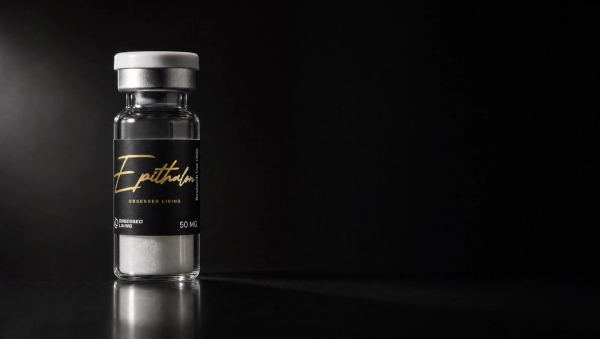
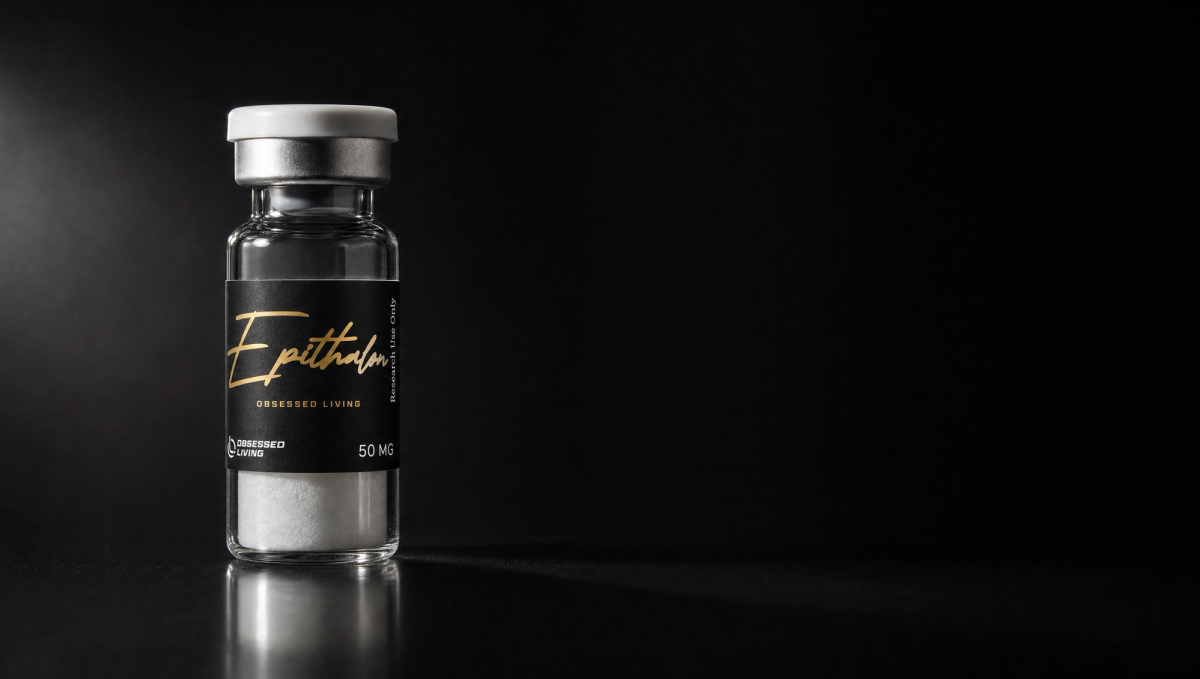
In laboratory use, Epithalon is typically provided as a lyophilized (freeze-dried) powder for reconstitution and in-vitro or in-vivo investigation. Material supplied for research should carry a Certificate of Analysis confirming HPLC-verified purity and sequence identity so that the compound under study is well-characterized.
Go deeper
- Epithalon & Telomerase Activity in Published Research — a focused look at the telomerase and telomere-biology studies.
- Epithalon, the Pineal Gland & Circadian Signaling in Research — what the pineal-melatonin and clock-gene studies actually reported.
- Epithalon Research FAQ — common questions, answered strictly in a research context.
- Epithalon Peptide Research Overview — an additional published overview on the compound's research landscape.
Research materials
Related compound: Epithalon (AEDG) — supplied as research-grade lyophilized powder with Certificate of Analysis. Research use only. Not for human consumption.
The Obsessed Living Research Team summarizes peer-reviewed peptide research for educational, research-use reference. Content is not medical advice. Our research standards.